
Buying a house in Friuli, where the 1976 earthquake struck: zones and checks
None of Friuli Venezia Giulia's 215 municipalities is in zone 4, the lowest: 32 are in zone 1, 108 in zone 2 and 75 in zone 3. The hazard is regional; what differs is the house, and its year and paperwork tell you how.
Published 22 October 2026
What zones 1, 2 and 3 mean
Italian municipalities fall into four seismic zones, in the classification published by the Civil Protection Department: from 1, where a strong earthquake is most likely, to 4, the least hazardous. Friuli Venezia Giulia no longer has a zone 4: regional resolution no. 845 of 6 May 2010 dropped it, because the 2008 building code already gave the towns then in zone 4 stronger design shaking than that zone allows.
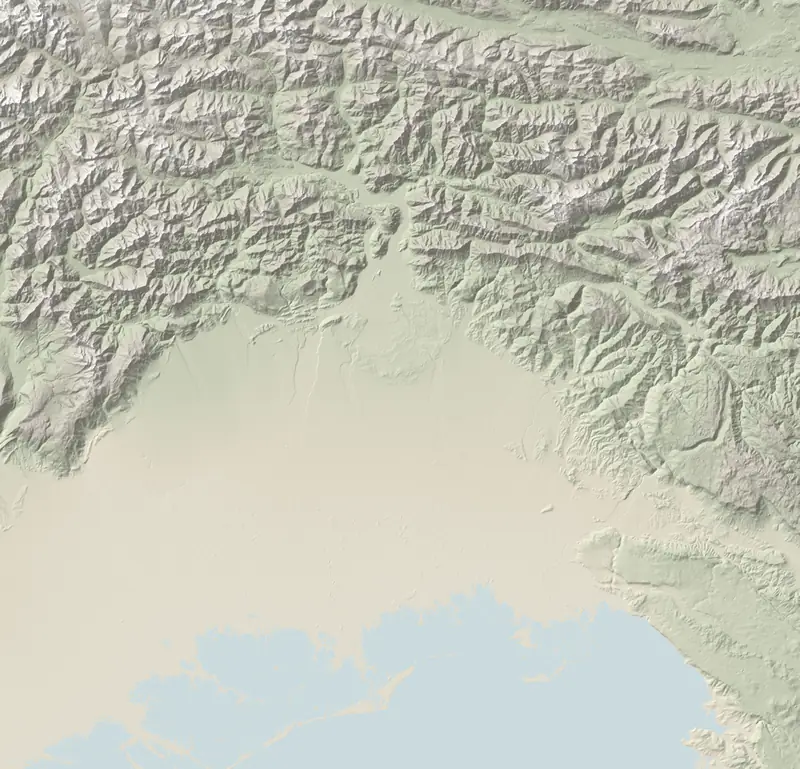
Mind the colours: the map shades from light to dark by zone number, so the palest dots are zone 1, the most exposed. The pale band follows the Pre-Alps; the plain south of Udine, the lagoon and the province of Trieste are all zone 3.
The municipalities in zone 1
There are 32, including every municipality around Gemona. For each: the highest intensity observed on 6 May 1976 (INGV macroseismic database) and the share of residential buildings put up from 1981 onwards (2011 census).
| Municipality | 1976, MCS scale | Buildings from 1981 |
|---|---|---|
| Amaro | 8-9 | 20% |
| Andreis | 7 | 14% |
| Artegna | 9 | 49% |
| Attimis | 9 | 34% |
| Barcis | 7 | 3% |
| Bordano | 9 | 69% |
| Buja | 9-10 | 27% |
| Castelnovo del Friuli | 8-9 | 32% |
| Cavasso Nuovo | 8 | 23% |
| Clauzetto | 8-9 | 15% |
| Fanna | 8 | 30% |
| Forgaria nel Friuli | 9-10 | 54% |
| Frisanco | 8 | 5% |
| Gemona del Friuli | 9-10 | 35% |
| Lusevera | 9-10 | 46% |
| Magnano in Riviera | 9 | 49% |
| Maniago | 7 | 22% |
| Meduno | 8 | 18% |
| Montenars | 9-10 | 69% |
| Montereale Valcellina | 7-8 | 16% |
| Nimis | 8-9 | 36% |
| Osoppo | 9-10 | 52% |
| Pulfero | 8 | 4% |
| Resia | 9 | 46% |
| Savogna | 7-8 | 4% |
| Taipana | 8-9 | 33% |
| Tarcento | 9 | 33% |
| Trasaghis | 9-10 | 51% |
| Travesio | 8-9 | 18% |
| Vajont | no data | 21% |
| Venzone | 9 | 61% |
| Vito d'Asio | 9-10 | 52% |
The MCS scale grades observed damage, not the energy released, which is what magnitude measures. The database holds no 1976 observation for Vajont.
A zone is not a report card from 1976
A zone sums up the shaking expected in the main town of each municipality, not the damage of the past. Majano, Ragogna and Pinzano al Tagliamento went down from zone 1 to zone 2 in 2010, yet in 1976 at least one place in each of them reached intensity 9-10, as Gemona did. The same year Attimis, Pulfero, Savogna, Andreis, Barcis and Montereale Valcellina moved up into zone 1. And the strongest shaking ever recorded in Tolmezzo, 9, dates from 1348.
Since 1 July 2009 engineers design for the acceleration expected at the building's own location, on a 5 km grid; the zone serves planning and inspections. And small villages have few historical observations, so a low value may only mean little was recorded.
1976 and the houses standing today
The main shock of 6 May 1976, magnitude 6.5, struck hardest in the middle Tagliamento valley; a second of 5.9 followed on 15 September. 965 people died. According to the Civil Protection Department, most of the worst-hit towns, Buja, Gemona and Osoppo among them, were not classified as seismic and had no specific building rules. Mayors and residents played the central role in rebuilding, and homes and factories went back on the same sites; in little more than 15 years Friuli was back on its feet.
The census still shows it. In Trieste 79% of residential buildings predate 1971; in the ten municipalities below, that share is the lowest in the region.
| # | Municipality | Zone | Buildings before 1971 |
|---|---|---|---|
| 1 | Artegna | Gemona, Venzone and Lake Cavazzo | 2% |
| 2 | Resiutta | Tarvisio, Canal del Ferro and Val Resia | 3% |
| 3 | Venzone | Gemona, Venzone and Lake Cavazzo | 4% |
| 4 | Magnano in Riviera | Moraine hills and San Daniele | 8% |
| 5 | Resia | Tarvisio, Canal del Ferro and Val Resia | 10% |
| 6 | Cavazzo Carnico | Carnia and Sappada | 12% |
| 7 | Vajont | Spilimbergo, Maniago and the magredi | 13% |
| 8 | Villa Santina | Carnia and Sappada | 16% |
| 9 | Osoppo | Gemona, Venzone and Lake Cavazzo | 16% |
| 10 | Enemonzo | Carnia and Sappada | 18% |
Age is not the whole story: the census lumps 1971–80 together, before and after the quake, and says nothing about a single house.
What to ask about a house
- Year of construction and building permits. A house built before 1976 in a town not then classified, and neither rebuilt nor strengthened since, went up with no seismic rules.
- Later structural work: who designed it, when, and under which permit.
- The design code: today it is Italy's 2018 technical standards for construction (NTC 2018).
- The seismic risk class, if one exists: a qualified professional certifies it under the guidelines of Ministerial Decree 58/2017.
- A structural engineer before you sign the preliminary contract: the zone covers the whole municipality, while you are buying one house.
The purchase steps are in how buying works in Italy; flood risk has its own page.
The Sismabonus in 2026
Owners who make a building safer can deduct 36% of the cost from Italian income tax, or 50% on the main residence of whoever holds ownership or another real right, on up to €96,000 per unit, spread over 10 yearly instalments. It applies in zones 1, 2 and 3, so across the whole region. The designer certifies the risk class before and after the work, with the building permit and before work starts; seismic assessments qualify too. It is claimed in the Italian tax return, so it only helps if you pay income tax in Italy. These rates cover 2025 and 2026; for 2027 and your own case, ask a commercialista (accountant).
Questions
Which towns in Friuli are in seismic zone 1?
32 municipalities along the Pre-Alpine belt, including Gemona, Osoppo, Venzone, Bordano and Maniago. The full list is in the table above.
Is Trieste in an earthquake zone?
Yes: since 2010 Trieste has been in zone 3. Before that it was in zone 4, like Grado, Lignano and Monfalcone.
Does the Sismabonus apply everywhere in Friuli?
Yes, in every municipality, since all are in zone 1, 2 or 3: 36% for 2026 spending, or 50% on a main residence, set against Italian income tax.
Were houses rebuilt after the 1976 Friuli earthquake built to seismic standards?
It depends on when each was designed and under which rules. Ask for the building permits, the structural file and, if there is one, the seismic risk class.
Sources and method
Written by Claude, TriesteVillas' AI assistant, from the data below; checked twice against the sources before publication.
The figures on this page come from:
- Dipartimento della Protezione civile — classificazione sismica dei comuni (aggiornata al 31/05/2025) (data as of 2026-10-22) · CC BY 4.0
- INGV — Database Macrosismico Italiano DBMI15 v4.0 (Locati et al., 2022) (data as of 2026-10-22) · CC BY 4.0
- ISTAT — Censimento della popolazione e delle abitazioni 2011: abitazioni occupate e non occupate, epoca di costruzione degli edifici (data as of 2026-10-22) · CC BY 4.0
- Dipartimento della Protezione Civile — «Il terremoto del Friuli» (pagina storica) (data as of 2026-10-22) · CC BY 4.0 (Fonte: Dipartimento della Protezione Civile-Presidenza del Consiglio dei Ministri)
- Agenzia delle Entrate — guida «Spese per interventi di recupero del patrimonio edilizio, Sisma bonus, Bonus verde» (dichiarazione 2026), capitolo Sisma bonus (data as of 2026-10-22) · documento ufficiale, citato e non copiato
- Friuli Venezia Giulia regional government — resolution no. 845 of 6 May 2010 on seismic classification, listed as current by Italy's Civil Protection Department (2026-10-22)
- Gazzetta Ufficiale — Ministerial Decree of 17 January 2018, updated technical standards for construction (NTC 2018) (2026-10-22)