
The regional first-home grant: who gets it, and why it is larger in the mountains
Buy the home you will live in and the Region pays you €10,500, or €15,500 in the 91 fully mountainous municipalities, plus €4,500 if you are under 36. The catch: as a rule you must have been registered as resident in the region for 5 years within the last 8, which someone moving from abroad on their own will not have, unless they are an emigrant from the region or descended from one.
Published 22 October 2026
How much, and where it is worth more
The grant is a one-off, non-repayable payment, made once the purchase is complete. A purchase earns €10,500; in the 91 municipalities that regional law 33/2002 classes as fully mountainous it rises to €15,500.
| Type of project | Other municipalities | Fully mountainous municipalities |
|---|---|---|
| Purchase | €10,500 | €15,500 |
| Purchase plus renovation | €12,000 | €17,500 |
| Extra, under 36 (single person or couple) | €4,500 | €4,500 |
| Extra, for people aged 65 or over, large families, disabled people and other vulnerable households | €2,500 | €2,500 |
You get one extra or the other, never both.
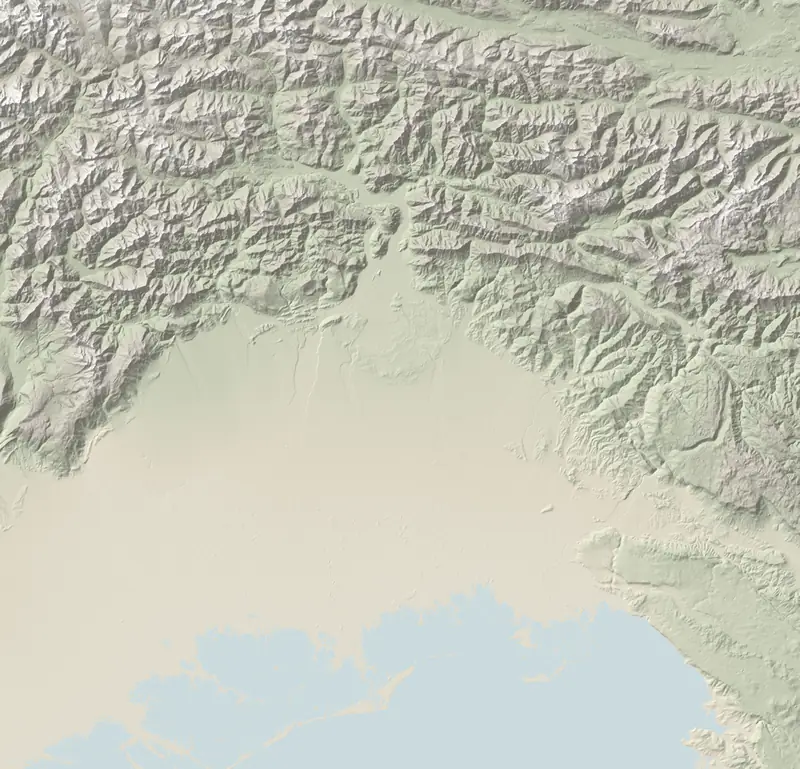
"Fully mountainous" is not just Carnia and the Friulian Dolomites. Muggia, Duino Aurisina, Sgonico, Monrupino and San Dorligo della Valle, on the Karst and the coast around Trieste, are on the list too. Gemona, Cividale, Tarcento and Trieste itself are only partly mountainous, so they stay at €10,500.
The conditions, one by one
- Nationality: Italian or another EU country (family members included), or non-EU with a long-term residence permit or a permit valid for at least a year.
- Residence in the region: as a rule at least 5 years, not necessarily in a row, within the 8 before you apply. Couples (married, in a civil union or cohabiting, including those about to be) need only one partner to meet it; for emigrants, see below.
- No other home: for the last 2 years nobody in the household may have owned another dwelling, outright, as bare owner or with a life interest, in Italy or abroad. A few cases are exempt, such as uninhabitable houses or inherited shares. Nor may you have had any first-home aid in the last 15 years.
- Means: a household ISEE (Italy's means-test indicator) of no more than €30,000, and an ISE built on at least €5,000 of your own real income; in a couple one partner is enough.
- The property: a cost of up to €200,000 (taxes included), a cadastral area of up to 120 m², nothing classed as luxury, and at least €35,000 paid out of your own pocket (notary fees do not count).
- The mortgage: compulsory, for at least 10 years and at least half the cost. Cash buyers are not eligible.
- Applying: online only, through the Region's IOL portal, signing in with SPID (level 2), the Italian electronic ID card (CIE) or a CNS card. Any time of year, but before you sign the deed.
What you commit to
Once the grant has been set, you must have your habitual home and your registered residence in the property for 5 years, and for the same period you may not let it or sell it. Break the rules and the whole sum goes back, with interest. Time spent abroad for study or work is allowed up to 3 years in total, but the ban on letting still applies. This is not money for a holiday home.
Moving from abroad: what works and what does not
- Newly arrived and buying alone, you are as a rule not eligible: without 5 years of residence within the last 8, the application fails, whatever your passport. The exception is emigrants and their descendants, below.
- With a partner who has lived here for years, you may qualify: one of you can bring the residence. The rule on owning other homes, however, covers the whole household.
- Still own a house in your own country? You stay out until 2 years after selling it.
- Emigrant families: for people who emigrated from Friuli Venezia Giulia, or from the former Italian territories that passed to Yugoslavia, and for their relatives and descendants living abroad, years spent abroad count as residence.
- British and American buyers: you also need a long-term permit or one valid for at least a year.
A law in transition
The law behind the grant, regional law 1/2016, was repealed by regional law 6 of 26 June 2026, in force since 30 June. The current rules apply until the new implementing regulations are issued, and in mid-October 2026 none had appeared. The new law keeps, as the rule, the 5 years of residence out of 8 and a duty to live in the home for at least 5 years (the regulations may change how long and from when). It also announces specific measures for mountain areas, and allows support without the residence threshold for people moving to the region for work; none has been published so far.
Applications are funded in the order they arrive, as money becomes available: in October 2026 the queue had reached applications filed on 30 June 2026. You may go ahead and buy while you wait. For your own situation, ask the regional offices or your adviser before you sign.
Questions
Who is eligible for the regional first-home grant in Friuli?
Someone buying, with a mortgage, the home they will live in, who as a rule has been registered as resident in Friuli Venezia Giulia for 5 years within the past 8 (in a couple, one partner is enough), has an ISEE of up to €30,000 and has owned no other home, in Italy or abroad, for at least 2 years.
How much is the first-home grant in a mountain village in Friuli?
€15,500 in the fully mountainous municipalities, or €20,000 if the buyer is under 36.
Can a foreigner get the Friuli first-home grant?
Yes, as an EU citizen or with the required permit, after 5 years' residence here within the past 8, or when buying with a partner who has them. Someone who has just arrived and buys alone, as a rule, cannot; emigrants from the region and their descendants are the exception.
Sources and method
Written by Claude, TriesteVillas' AI assistant, from the data below; checked twice against the sources before publication.
The figures on this page come from:
- Regione FVG — contributi per l'acquisto della prima casa (DPReg 144/2016 artt. 7-8, testo coordinato 08/08/2025; L.R. 1/2016 abrogata dalla L.R. 6/2026, regole in vigore fino ai nuovi regolamenti) (data as of 2026-10-22) · atti ufficiali
- Regione FVG — Acquisto, nuova costruzione e recupero della prima casa di abitazione: importi, requisiti, domanda, obblighi, stato delle prenotazioni (agg. 14/10/2026) (data as of 2026-10-22) · fatti da pagina istituzionale («tutti i diritti riservati»): riformulati, non copiati
- D.P.Reg. 13 luglio 2016, n. 144 — Regolamento dei contributi di edilizia agevolata per la prima casa, testo coordinato all'8 agosto 2025 (artt. 7, 8, 9, 20) (data as of 2026-10-22) · atto normativo, pubblico dominio
- Regione FVG — Purchase, new build and renovation of a first home (updated 14/10/2026) (2026-10-22)
- D.P.Reg. 144/2016, regulation on first-home grants, consolidated text of 8 August 2025 (2026-10-22)
- FVG Regional Law no. 6 of 26 June 2026 on housing policy (Lexview) (2026-10-22)
- FVG Regional Law 7/2002, art. 2: emigrants from the region and their descendants (Lexview) (2026-10-22)
- Regione FVG — List of fully mountainous municipalities (Regional Law 33/2002, Annex A), from the 2025 reuse call (2026-10-22)
- Regione FVG — Regional mountain territory: partly mountainous municipalities (2026-10-22)