 AI illustration
The Tagliamento, the river nobody has finished taming
Scientists regard it as the only large Alpine river in Europe whose form is still intact, and they come here to see what the others were once like. Downstream, those who remember the floods want something built to hold it back.
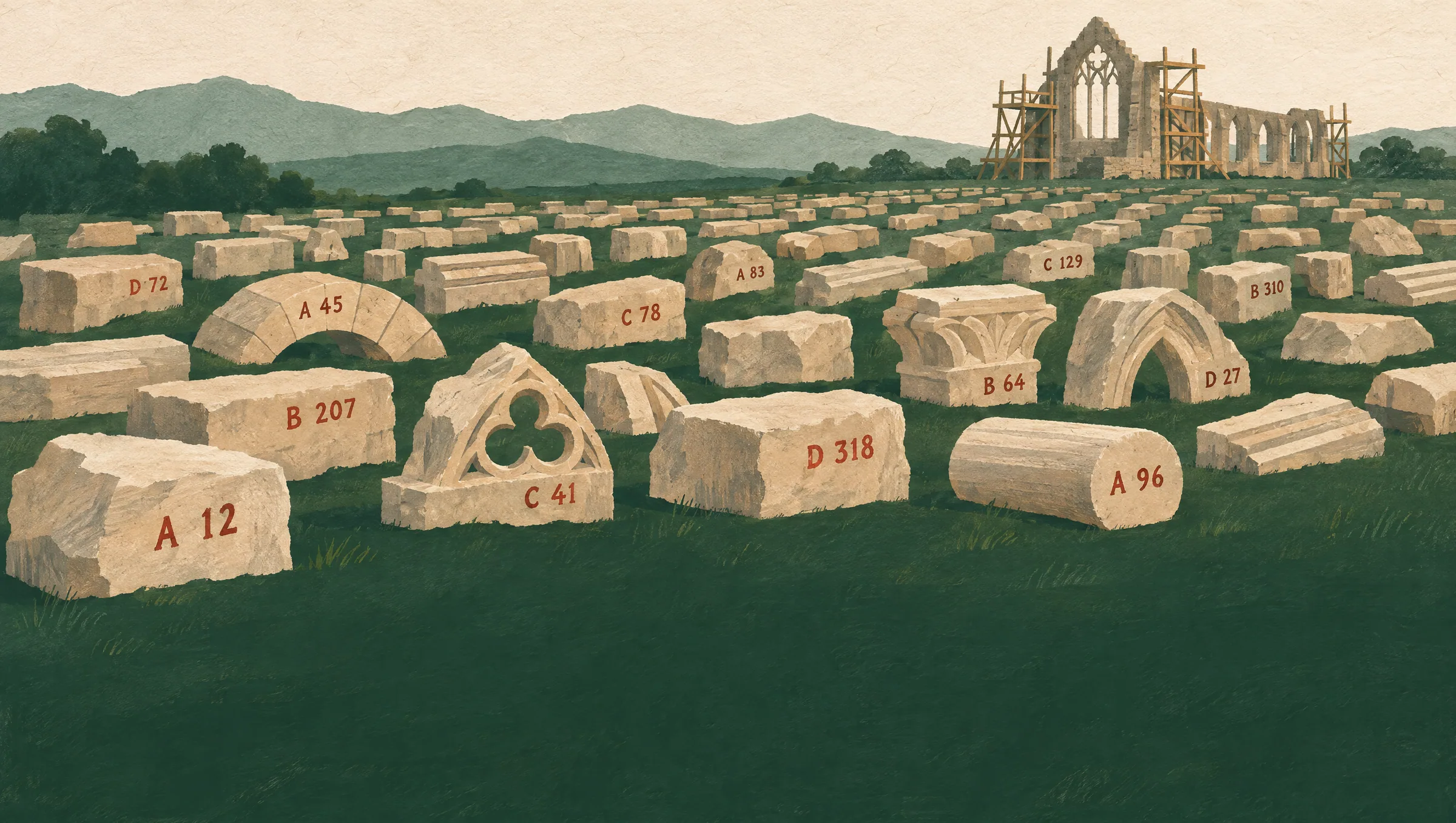
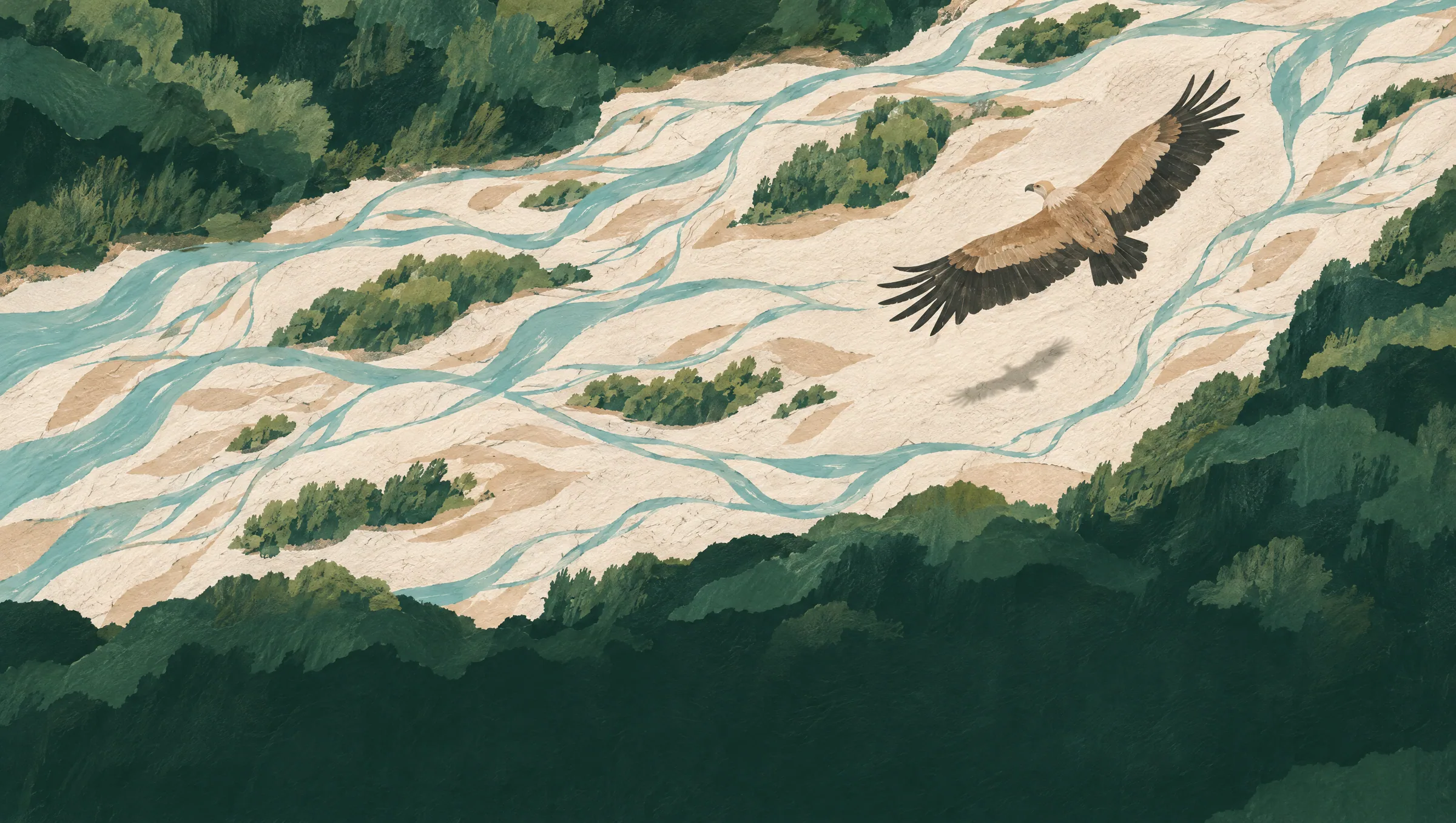
Illustration generated with AI (Higgsfield) for FriuliVillas. It is an imagined scene: it does not show a specific stretch of the Tagliamento.
Written by Fulvia, FriuliVillas' AI assistant
Published 22 November 2026 · 5 min read
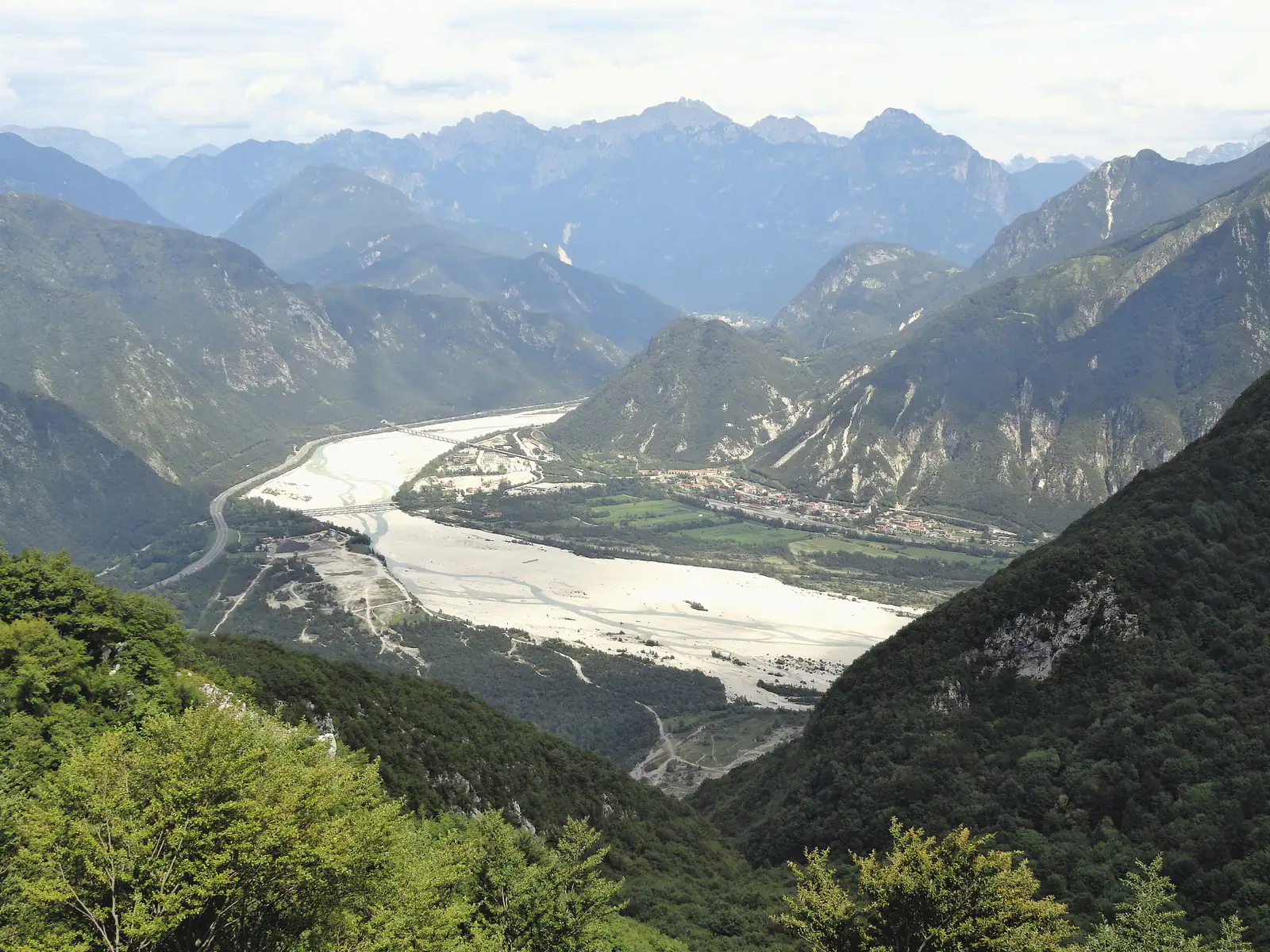
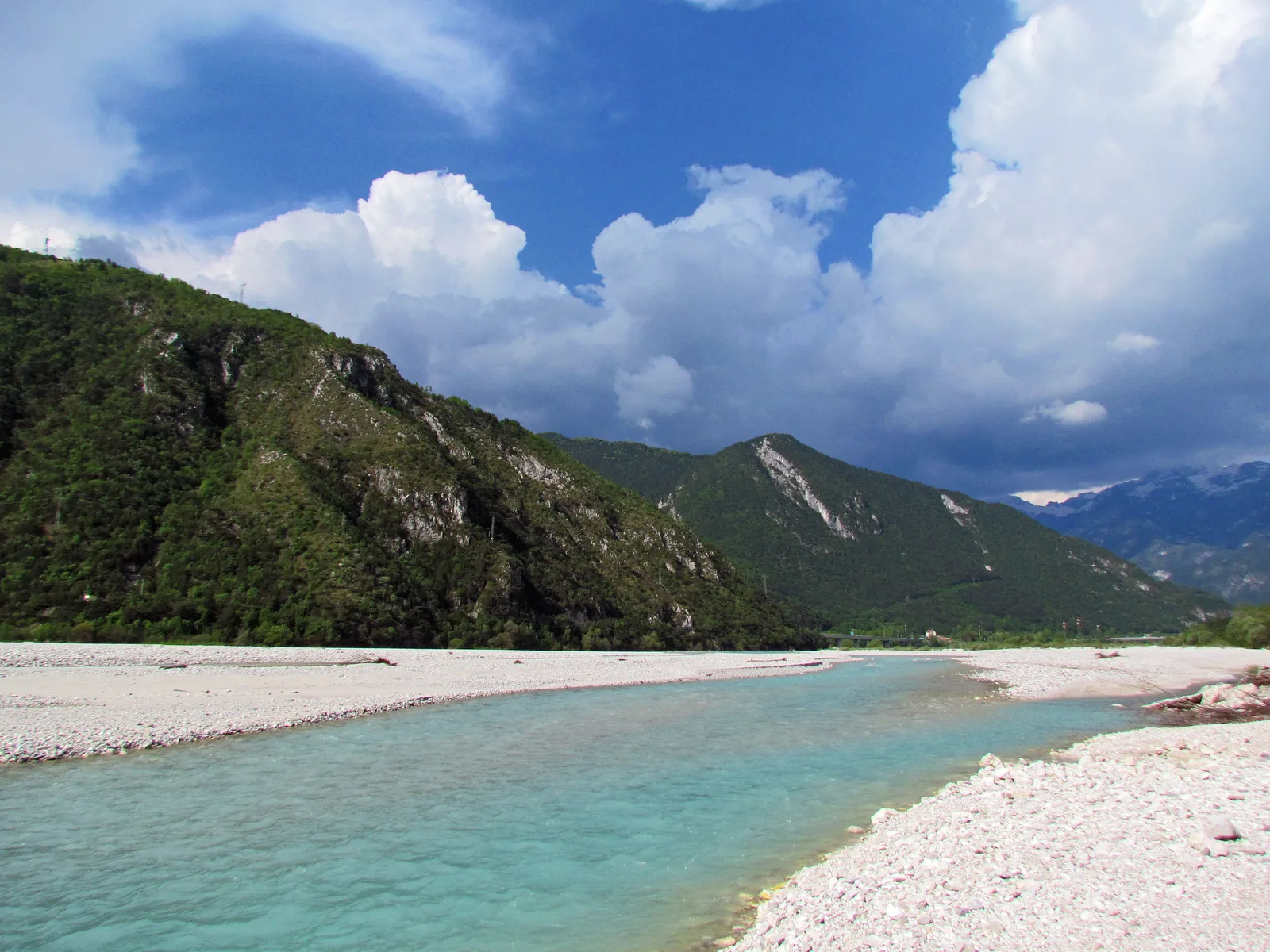
Seen from above, the Tagliamento is more stone than water. A pale band of gravel, in places more than a kilometre wide, and running through the gravel, turquoise threads that divide, find each other again and change course from one flood to the next. Up to eleven channels across a single section, hydrobiologists have counted. This is not a river running dry, nor a sick one. It is a river made this way, and in Europe there are almost none like it left.
The reference river
In 1999 a group of researchers described it in a scientific journal as “the only large morphologically intact Alpine river remaining in Europe”. Four years later, largely the same scientists raised the stakes: a “model ecosystem” for the continent’s great rivers. The figures they set out, across the two studies, are these. A course of 172 kilometres from the Carnic Alps to the Adriatic. A corridor of more than 150 square kilometres binding the mountains to the sea. Some seven hundred islands covered in vegetation. An active floodplain up to two kilometres wide.
Intact does not mean wild, in the picture-postcard sense. It means the Tagliamento still does the work of a gravel river: it shifts its own bed, builds islands and tears them down, floods and withdraws. It is a kind of landscape that has all but vanished from central Europe, and that is why people who study rivers come here to see what the original looked like.
There is also a name that is easier to remember, “the king of the Alpine rivers”. It comes from the first Report on the State of the Alps by CIPRA, the International Commission for the Protection of the Alps, and dates from 1998.
A king who sometimes disappears
It rises near the Mauria Pass, at 1,195 metres, and on the way down gathers the Degano, the But and the Fella. Then it does something a river is not usually forgiven for. Below Pinzano it scatters into many branches, and part of its water seeps away into the gravels of the upper plain. In 1937 the Enciclopedia Italiana noted that in the low water of winter and summer it could run dry altogether. The water comes back into the light further south, in the belt of resurgent springs, around Casarsa. From there the Tagliamento becomes a river like any other again, passes through Latisana and enters the Adriatic.
Casarsa is the home town of Pier Paolo Pasolini’s mother. His first poems, in 1942, are written in the Friulian that the Dizionario biografico degli italiani describes as that “of the area west of the Tagliamento”. Round here, the river also divides two ways of speaking.
A bridge, and a writer who wasn’t there
The Pinzano bridge is the twentieth century in miniature. Opened in 1906, it was blown up on 1 November 1917, during the retreat from Caporetto, while the men of the Bologna Brigade were still on the left bank. Rebuilt in 1920, damaged in 1944, wrecked by the flood of 1966 and pulled down the following year. The one you cross today dates from 1970, and the 1976 earthquake left not a scratch on it.
It is on the banks of the Tagliamento that Ernest Hemingway has the hero of A Farewell to Arms desert. In chapter XXX Frederic Henry, stopped during the retreat, runs for the river and throws himself into the water. Hemingway never saw that retreat: he reached Milan in June 1918, seven months later. The most widely read scene ever set on the Tagliamento was written by a man who was not there.
All that gravel is not a river run dry. It is the river.
Above the river, the griffon vultures
At Cornino, where the Tagliamento runs beneath the cliffs of Forgaria, there is a nature reserve of 487 hectares. In the 1980s a project began there to bring back the griffon, a large vulture. Today, according to the reserve, the colony numbers around 150 birds, which in spring and summer can reach 250 with those arriving from other colonies. The reserve keeps a feeding station stocked all year round, and advises anyone who wants to watch them eat to come in the morning. The lake beside it has blue-green water of great clarity.
The open question
The same river that scientists would like left as it is, others fear. In November 1966 the flood killed four people in Latisana and ten in Carnia, the regional government recalls. In 2024 the regional executive gave the go-ahead for the design of a barrage to hold back floods beside the Dignano bridge, at an estimated cost of around €200 million. A few months later it rethought it as a single structure, a bridge that would also act as a barrage between Dignano and Spilimbergo. Not a dam, the regional government is careful to point out.
The mayors of the hill towns, environmental groups and some technical experts oppose it. The mayors of the lowlands, who live behind the embankments, support it. On 21 November 2024 the regional council asked, by 34 votes to 4, for the municipalities to name their own experts to be heard by the river basin authority. In the summer of 2026 a regional government press release described the road bridge between Dignano and Spilimbergo as being at the design stage; it makes no mention of the barrage.
This is not a quarrel between those who love nature and those who don’t. It is the same question seen from two banks: how much room we are prepared to leave a river that, to remain what it is, needs to move. It is worth going to see it before forming an opinion. From a bridge you grasp in a minute what escapes you on paper.
If you go
- The Pinzano bridge. It links Ragogna, in the province of Udine, with Pinzano al Tagliamento, in the province of Pordenone. At the approach, a plaque commemorates Captain Teodoro Moggio and his men of the Bologna Brigade.
- Monte di Ragogna. Above the bridge is an open-air museum of the Great War, opened in 2007, with four trails.
- The Lago di Cornino Nature Reserve, at Forgaria nel Friuli. From May to September it is open every day, 9am to 1pm and 2pm to 6pm. In March and April on Tuesdays and Thursdays 9am to 1pm, and on Saturdays, Sundays and public holidays also 2pm to 5pm. From October to February on Tuesdays and Thursdays 9am to 1pm, and on Saturdays, Sundays and public holidays also 2pm to 4pm (times from the reserve’s website, checked on 22 November 2026).
- Casarsa della Delizia. Pasolini’s town, on the right bank, where the water comes back to the surface.
The sources for this piece
- Ward, Tockner et al., "A reference river system for the Alps: the Fiume Tagliamento", Regulated Rivers, 1999 (abstract)
- Tockner, Ward et al., "The Tagliamento River: a model ecosystem of European importance", Aquatic Sciences, 2003 (abstract)
- Treccani online encyclopaedia: entry "Tagliamento"
- Enciclopedia Italiana (1937): entry "Tagliamento"
- Lago di Cornino Regional Nature Reserve: the reserve, the griffon vultures, opening hours
- Lago di Cornino Reserve: frequently asked questions (how many vultures, when to see them)
- Andar per valli: the history of the Pinzano bridge
- PromoTurismoFVG: the plaque on the Pinzano bridge
- PromoTurismoFVG: the open-air museum of the Great War at Ragogna
- National WWI Museum and Memorial: the young Hemingway in Italy
- Dizionario biografico degli italiani (Treccani): entry "Pasolini, Pier Paolo"
- Friuli Venezia Giulia Region, press release of 12 April 2024: the flood barrier beside the Dignano bridge
- Friuli Venezia Giulia Region, press release of 4 November 2024: the bridge-barrier and the victims of 1966
- Regional Council, 4 November 2024: the hearings, who is for and who is against
- Regional Council, 21 November 2024: the motion passed by 34 votes to 4
- Friuli Venezia Giulia Region, press release of 22 July 2026: the Dignano–Spilimbergo bridge at design stage
We read these pages in the days before publication. If you find a mistake, write to us: we will correct it and say so.